
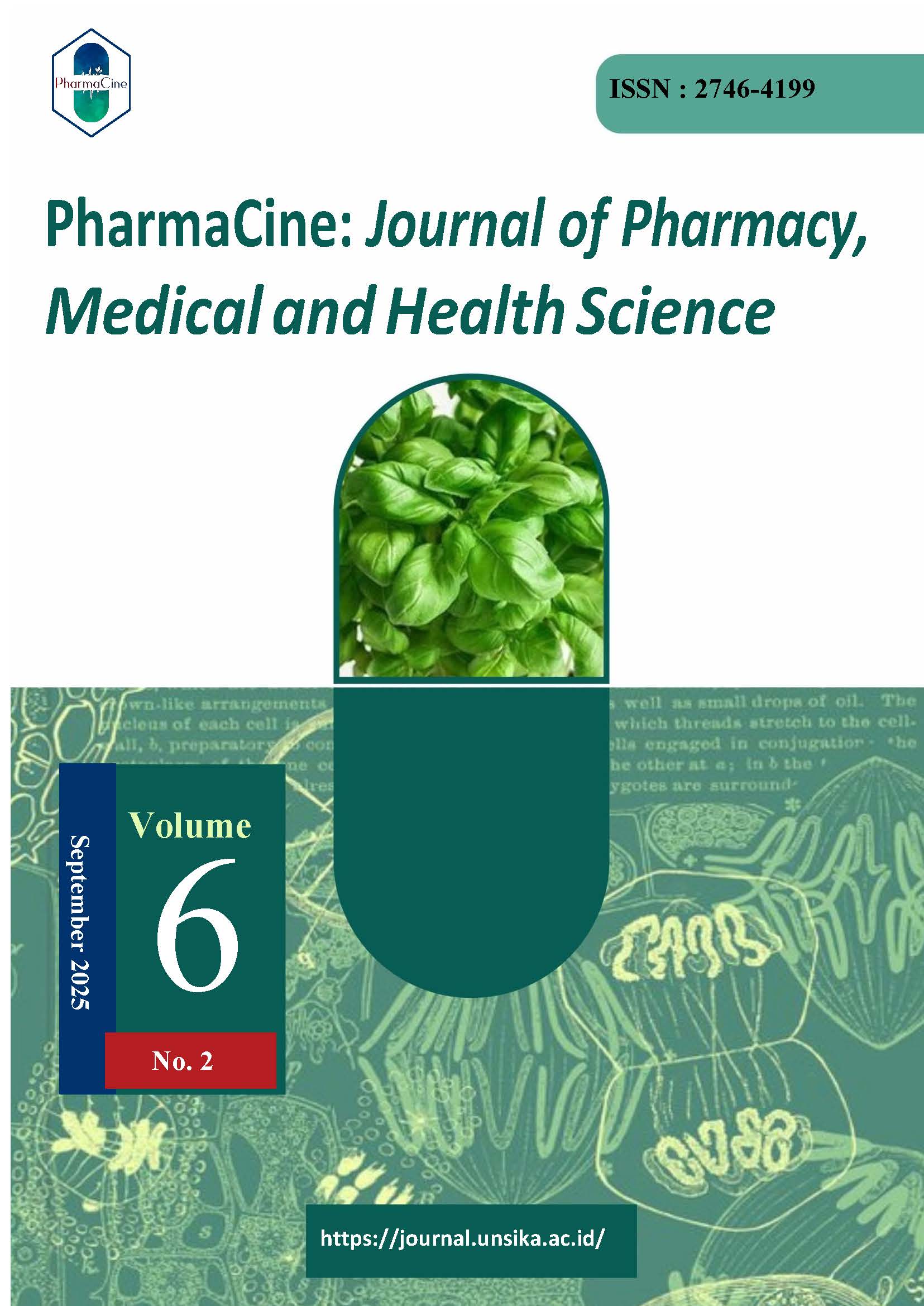
Utilization of Tubers as Filler Ingredients in the Development of Natural Nutrition-Based Fish Feed
Pemanfaatan Umbi-Umbian sebagai Bahan Pengisi dalam Pengembangan Pakan Ikan Berbasis Nutrisi Alami
DOI:
https://doi.org/10.35706/pc.v6i2.13186Keywords:
Tuber crops, Filler materials, Spare protein, Processing, AquacultureAbstract
Freshwater fish feeds are typically high in protein (>25%), creating a need for cost-effective carbohydrate fillers that do not compromise growth performance. Tuber crops (cassava, taro, sweet potato, potato) are promising carbohydrate sources; however, antinutritional factors and processing methods largely determine their success. This review searched literature on Google Scholar. Inclusion criteria were studies on aquaculture fish species that reported at least one performance outcome (growth/SGR, FCR, PER) or digestibility, and that specified the tuber organ/material and the applied processing. Exclusion criteria were non-aquatic studies, studies without performance/digestibility data, and non-scholarly secondary sources. Two reviewers screened independently, with disagreements resolved by consensus. A narrative/thematic synthesis was conducted. Fermentation and/or heat processing consistently reduced antinutritional factors and improved starch digestibility. In tilapia and catfish, carbohydrate substitution from tubers was generally safe at ~20–30% of diet carbohydrates without significant deterioration in SGR/FCR when adequate processing was applied; higher inclusion levels depend on species, life stage, and detoxification intensity. Tuber crops are therefore promising filler ingredients, particularly when preceded by fermentation. Practically, a 20–30% substitution can serve as a starting point for formulation, followed by optimization by species and production stage.
Keywords: Tuber crops; Filler materials; Spare protein; Processing; Aquaculture.
Downloads
References
Abdulrashid M, Agwunobi LN. (2011). Taro cocoyam (Colocasia esculenta) meal as feed ingredient in: Poultry. Pakistan Journal of Nutrition. 8(5):668-673.
Aderolu AZ, Owonire LM, Oladipupo MO. (2009). Processed cocoyam tuber as carbohydrate source in the diet of juvenile African catfish (Clarias gariepinus). European Journal of Scientific Research. 35(3):453-460.
Adewolu MA. (2008). Potentials of sweet potato (Ipomoea batatas) leaf meal as dietary ingredient for Tilapia zilli fingerlings. Pakistan Journal of Nutrition. 7(3):444-449
Amalia SN, Elfidasari D. & Sugoro I. (2020). Pengaruh Pemberian Pakan Kentang terhadap Laju Pertumbuhan Benih Ikan Sapu-Sapu (Pterygoplichthys pardalis) dan Kualitas Air Akuarium Pemeliharaan. Prosiding SNPBS (Seminar Nasional Pendidikan Biologi dan Saintek).
An LV. & Lindberg JE. (2004). Ensiling of sweet potato leaves (Ipomoea batatas Lam) and the nutritive value of sweet potato leaf silage for growing pigs. Asian-australasian journal of animal sciences. 17(4):497-503.
Antial BS, Akpanz EJ, Okonl PA. & Umorenl IU. (2006). Nutritive and anti-nutritive evaluation of sweet potatoes. Pak J Nutr. 5(2):166-168.
Chandrasekara A. & Kumar TJ. (2016). Roots and tuber crops as functional foods: A review on phytochemical constituents and their potential health benefits. Int J Food Sci. 1-15.
Davies, A.A., Oso AO, Bamgbose AM, Sanwo KA, Jegede AV. & Sobayo RA. (2014). Effect of feeding cassava (Manihot esculenta Crantz) root meal on growth performance, hydrocyanide intake and haematological parameters of broiler chicks. Trop Anim Health Prod. 46(7):1167-1172.
FAO. (2018). The State of Food Security and Nutrition in the World 2018. Building Climate Resilience for Food Security and Nutrition. Rome, Italy: FAO;
Febriyanti TL & Wijayanti A. (2023). Identification the Potential Use of Talas Beneng Leaves (Xanthosoma) Vegetable Protein in Fish Feed. Jurnal Ilmiah AgriSains. 24(3):170-180.
Fanelli NS, Torres-Mendoza LJ, Abelilla JJ. & Stein HH. (2023). Chemical composition of cassava-based feed ingredients from South-East Asia. Animal Bioscience. 36(6):908-919.
Gopan A, Sahu NP, Varghese T, Sardar P, Maiti MK. (2019). Protein isolate prepared from karanj seed cake: Effect on growth, body composition and physiometabolic responses in Labeo rohita fingerlings. Aquaculture Nutrition. 26(3):737-751.
Gopan A, Lalappan S, Varghese T, Kumar Maiti M. & Peter RM. (2020). Anti-Nutritional Factors in Plant-Based Aquafeed Ingredients: Effects on Fish and Amelioration Strategies. Biosc Biotech Res Comm Special Issue. 13(12):1-09.
Ghazi S, Rooke JA, Galbraith H. & Bedfford MR. (2002). The potential for the improvement of the nutritive value of soyabean meal by different protease in broiler chick and broiler coockerels. Brit Poul Sci. 43:70-77.
Gil J.L., & Buitrago AJA. (2002). La yuca en la alimentacion animal. In: Ospina B, Ceballos H, editors. La yuca en el tercermilenio: sistemas modernos de producción, procesamiento, utilización y comercialización. Cali, Colombia: Centro Internacional de Agricultura Tropical. p. 527-69.
Healthline. (2023). Taro Leaves: Nutrition, Benefits, and Uses. Healthline.
Hersila, N. Chatri, V. & Irdawati (2023). Senyawa Metabolit Sekunder (Tanin) pada Tanaman sebagai Antifungi Secondary Metabolite Compounds (Tannins) in Plants as Antifungi. Jurnal Embrio (15) ( 1 ) (16-22) 2023 p -ISSN :2085-403X e-ISSN: 2808-9766 https://ojs.unitas-pdg.ac.id/index.php/embrio Doi : 1031317/embrio
Hertrampf J.W. & Pascual, F.P. (2000). Handbook on Ingredients for Aquaculture Feeds. Kluwer Academic Publishers. London pp 506.
Heuzé V, Tran G, Archimède H, Régnier C, Bastianelli D. & Lebas F. (2016). Cassava roots. Feedipedia, a programme by INRA, CIRAD, AFZ and FAO.
Jalil, W. (2021). Pertumbuhan ikan nila (Oreochromis niloticus) dengan pakan buatan tepung daun singkong (Manihot utilissima Pohl) dan tepung kedelai (Glycine max). Aquamarine, 8(2), 9–14. Khatun K, Samrat MMI, Azad KN, Habib MAB. (2019). Use of potato tuber powder as replacement of wheat flour in the diet of GIFT (Oreochromis niloticus) fry. Bangladesh J Fish Res. 18(1-2):131-142.
Obasa SO, Babalola EO, Akinde AO, Idowu AA, Ojelade OC. & Nwekoyo VE. (2021). Impact of Processing on Cassava Root Tuber and Use as a Replacer of Maize in the Diet of Nile Tilapia, Oreochromis niloticus. Mal J Anim Sci. 24(2):39-49.
Odo GE, Agwu JE, Nweze NO, Sunday C, Nwadinigwe AO. & Onyishi G. (2016). Growth performance and nutrient utilization of Clarias gariepinus fed with different dietary levels of processed cassava leaves. 15(24):1184-1192.
Presston TR. (2004). Potential of cassava in integrated farming systems. Livest Resour Rural Dev. 10(8):20-28.
Priya BNV. & Saiprasad GVS. (2023). "Potato" Powerhouse for Many Nutrients. Potato Research. 66:563-580.
Rahman S, Habib AB, Fakir S, Halim A. (2019). Study the use of Cassava Tuber Powder as Replacement of Carbohydrate in the Diet of Genetically Improved Farmed Tilapia. Australia and New Zealand Journal of Social Business, Environment and Sustainability. 70(2):908-919.
Sanni, AI., Marlon-Guyot J. & Guyot, JP. (2002). New efficient amylase-producing strains of Lactobacillus plantarum and L. fermentum isolated from different Nigerian traditional fermented foods. Int J Food Microbiol. 72:53-62.
Seden ME, El-Tawil NE, Amer TN, Ahmad MH. & Dawood TI. (2017). Reducing feed cost by using sub-graded sweet potato tuber as a non-traditional energy source in Nile tilapia, Oreochromis niloticus diets. Abbassa Int J Aqua. 10(1):62-79.
Suhenda D, & Hidayat M. (2015) Pemanfaatan Tepung Daun Singkong (Manihot utilissima) yang Difermentasi dalam Pakan Buatan terhadap Pertumbuhan Benih Ikan Nila Merah (Oreochromis niloticus). Journal of Aquaculture Management and Technology. 4(2):51-59.
Zainuddin F. (2014). Efek Pengolahan Tepung Ubi Jalar, Ipomoea batatas pada Sintasan dan Pertumbuhan Ikan Koi, Cyprinus carpio. Jurnal Penelitian Sains, Universitas Papua. 20
Downloads
Published
How to Cite
Issue
Section
License
Copyright (c) 2025 PharmaCine : Journal of Pharmacy, Medical and Health Science

This work is licensed under a Creative Commons Attribution-ShareAlike 4.0 International License.
Authors who publish in PharmaCine: Journal of Pharmacy, Medical and Health Science agree to the following terms:
- Authors retain copyright and grant the journal right of first publication with the work simultaneously licensed under a Creative Commons Attribution-ShareAlike 4.0 International License that allows others to share the work with an acknowledgment of the work's authorship and initial publication in this journal.
- Authors can enter into separate, additional contractual arrangements for the non-exclusive distribution of the journal's published version of the work (e.g., post it to an institutional repository or publish it in a book), with an acknowledgment of its initial publication in this journal.
- Authors are permitted and encouraged to post their work online (e.g., in institutional repositories or on their website) prior to and during the submission process, as it can lead to productive exchanges, as well as earlier and greater citation of published work (See The Effect of Open Access).
PharmaCine : Journal of Pharmacy, Medical and Health Science by https://journal.unsika.ac.id/ is licensed under a Creative Commons Attribution-ShareAlike 4.0 International License.
You are free to:
- Share, copy and redistribute the material in any medium or format
- Adapt, remix, transform, and build upon the material for any purpose, even commercially.
- The licensor cannot revoke these freedoms as long as you follow the license terms.






 Bachelor of Pharmacy Study Program, Faculty of Health Sciences, Universitas Singaperbangsa Karawang